The HVAC Rebate Program Quietly Helping DFW Homeowners Beat the System — Before the Funding Runs Out
Energy incentive programs are covering a significant portion of the replacement cost for qualifying Dallas–Fort Worth homeowners with aging HVAC systems. Most people don't hear about it until a neighbor mentions it. Here's the full picture.
Marcus didn't plan on replacing his AC this summer.
His unit had been struggling for two seasons already — running constantly, barely holding 78 degrees during August afternoons, pushing his electric bill past $400 a month. A technician told him last fall that the system was "on borrowed time." He knew the call was coming. He just kept putting it off, assuming it would mean writing a large check he wasn't prepared to write.
What he didn't expect, when he finally made the call, was to find out he qualified for a rebate program that took thousands off what he'd actually owe.
"I thought I was going to be staring at $15,000 with no way around it," he said. "Nobody had told me these programs existed. Once the rebates were applied, the whole conversation changed."
Marcus's experience isn't unique. Across the Dallas–Fort Worth metro, qualifying homeowners are accessing energy efficiency incentive programs that dramatically offset the cost of HVAC replacement — programs funded through a combination of utility rebates and energy efficiency initiatives designed to accelerate the retirement of aging, inefficient systems.
Most homeowners have no idea they exist until it's almost too late to use them.
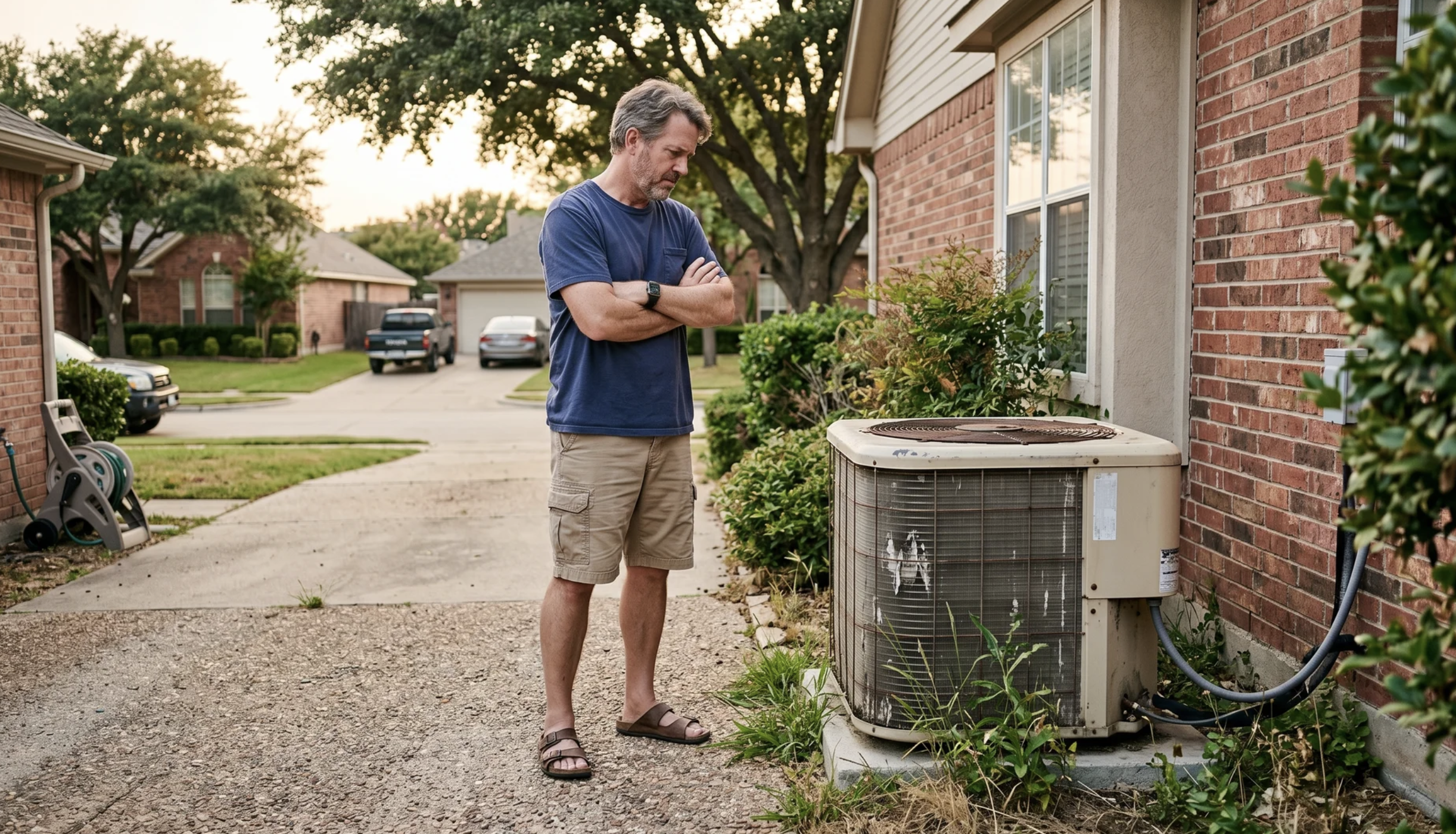
Qualifying DFW homeowners are accessing rebate programs most never hear about until funding closes in their area.
"The system I had was costing me every single month in energy bills I couldn't control. The rebates meant the upgrade actually made financial sense immediately — not years from now."
— Verified Q1ES Customer, DFWWhy Most DFW Homeowners Never Hear About These Programs
Here's the uncomfortable reality: the HVAC industry doesn't have a strong incentive to advertise programs that reduce what you pay.
Energy efficiency rebate programs exist because utility companies and energy efficiency administrators have a real operational interest in reducing peak grid load — especially during the brutal Texas summers when demand surges and older systems run at maximum inefficiency. To motivate homeowners to replace aging equipment faster, these programs offer meaningful financial incentives. Not coupons. Actual money applied to the cost of the job.
But nobody runs ads explaining how to access them. No mailer arrives telling you that your ZIP code may sit in an eligible service territory. The programs are real, the funding is real, and it's actively available to qualifying homeowners right now. The problem is that finding out requires knowing where to look — and most people don't know to look at all.
These programs are built specifically for homeowners with aging HVAC systems. If your AC or heating unit is 5 or more years old, and you own your DFW home, you are in the demographic these incentive programs were designed to serve.
How the Rebate Stack Actually Works
The reason savings can be substantial isn't one program — it's a combination of incentives that can be layered on a single qualifying replacement. Understanding how this works is the difference between knowing rebates exist in theory and actually capturing money you're entitled to.
How Incentives Stack on a Qualifying HVAC Replacement
Utility Efficiency Rebates
Local utility programs pay rebates when qualifying homeowners replace low-efficiency equipment with higher-rated systems. The rebate amount scales with the efficiency rating of the new unit — more efficient equipment unlocks larger rebates.
Energy Efficiency Program Incentives
State-level and regional energy efficiency programs provide an additional incentive layer on top of utility rebates. These stack on qualifying installations and specifically target aging system replacement.
Financing Optimization
Qualified homeowners using available 0% APR financing apply rebates directly to the principal, often producing a monthly payment that rivals — or undercuts — what they were already spending on inflated energy bills with the old, inefficient system.
The key word throughout is qualifying. Not every homeowner qualifies. Not every ZIP code participates in every program. The amount isn't fixed — it depends on the system being replaced, the system being installed, and what's available in your area when you apply. Which is exactly why the first step is finding out if your specific situation qualifies, before you commit to anything.
The Part Most People Get Wrong About How Rebates Work
When homeowners hear "rebate program," many picture a tedious process — government paperwork, long waits, uncertain timelines, a check that may or may not show up six months later. That image doesn't match the reality for qualifying homeowners working with a certified installation partner.
Eligibility is verified upfront. The rebates are applied to the job cost before the financing structure is built — so the amount you're financing or paying out of pocket already reflects the incentives. There's no separate rebate application to file and wait on. The savings show up in the actual deal.
"Smooth from assessment to install. Upfront pricing with incentives included — no surprises. I knew exactly what I was paying before anything started."
The Funding Window Is Not Permanent. Here's Why That Matters.
This is the detail most worth understanding clearly: these programs don't run indefinitely.
Energy efficiency incentive programs operate with finite funding allocations. That funding is consumed as qualifying installations are completed. When an area's allocation is exhausted, new applicants must wait for a replenishment cycle — and there is no guarantee that cycle restores the same funding level, the same terms, or arrives before summer.
Practically, this means two DFW homeowners with identical homes and identical HVAC systems can have completely different outcomes depending on when they check. One checks in March and qualifies. One waits until July and finds that availability in their territory has closed.
Texas summers create a predictable pressure on this dynamic: demand for HVAC replacement spikes sharply in late spring and through summer as systems fail under load. The combination of high demand and depleting allocations means the window for qualifying homeowners is meaningfully narrower during peak season than it is right now.
Funding levels vary by territory and deplete as qualifying installations are completed. Checking eligibility costs nothing and takes about 60 seconds. Waiting to check has a real cost if funding closes in your area first.
The Short Eligibility Checklist
Program eligibility comes down to a handful of factors. If you can check all of these, there's a strong probability your home is in the qualifying pool — though the only way to confirm is the eligibility check itself.
What DFW Homeowners Are Saying
The following reviews are from verified Q1ES customers who completed the assessment and installation process.
The 60-Second Eligibility Check
Quality 1 Energy Systems — the DFW-area certified installation partner managing the rebate-assisted upgrade program — offers a short eligibility survey that confirms whether your home qualifies, which programs apply in your area, and what the estimated incentive range looks like for your situation.
The survey takes about 60 seconds. There's no cost to check and no commitment attached to finding out. If your home qualifies, a Q1ES energy advisor calls to walk you through exactly what's available. If it doesn't, you'll know quickly and no one's time is wasted.
The only thing that costs something is waiting. If funding in your territory closes before you check, whether you would have qualified becomes an unanswerable question.
Common Questions
None. The eligibility survey is completely free. You answer a short set of questions about your home and situation, and you'll know whether you're in the qualifying pool — at no cost and no obligation.
A Q1ES energy advisor will reach out after your survey to walk you through your results and answer questions. There's no pressure and no obligation. Many people check eligibility and decide the timing isn't right for them. That's completely fine.
If your system is under 5 years old, you likely won't qualify for the primary replacement programs. That said, there may be supplemental efficiency add-ons (insulation, smart controls) that apply to your home. Worth a quick check.
Yes — rebates apply regardless of your payment method. Many homeowners who plan to pay cash find it worthwhile to review the 0% APR financing option alongside the rebate structure. The math sometimes favors keeping cash and taking the financing. Your advisor can run both scenarios side by side.
A Q1ES energy advisor typically follows up within one business day. You'll know the call is coming so it isn't unexpected.